

What are the 5 Essential Features of Every Carpenter Trailer?
A carpenter trailer is an excellent addition to any UTE or truck owned by a contractor working as a carpenter. This mobile workspace is specifically designed and outfitted for carpenters, but others can also use it. If you’re in some of these industries, a carpenter trailer will be a perfect addition to your business.
For those encountering this term for the first time, it’s worth explaining what it is and who sees the most benefits from owning it. Carpenter trailers are specifically designed for people working with wood - they are equipped with various tools, machines, and other features that help them do their jobs seamlessly.
In this article, we talk more about carpenter trailers, what they are and how they can be used, but we will mainly focus on the five essential features that every carpenter trailer must have. Follow up and learn how you can improve your business by implementing something like this.
What is a Carpenter Trailer?
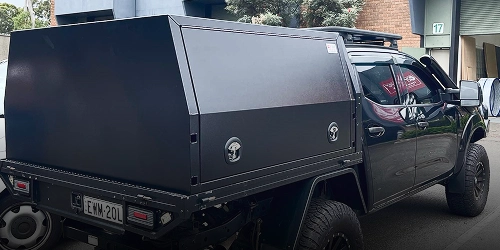
First things first – what are carpenter trailers? These specifically designed trailers are attached to your UTE, truck, or whatever powerful enough vehicle you’re driving. When you go to the construction site, the trailer will be there fully equipped with anything you may need at the moment.
When working carpenter jobs, you never know if you need to cut some of the wood, glue pieces together, or use paint. That’s why it is best if you have everything nearby. The carpenter trailer is the best way to keep things under control and have everything needed for your activities ready. So, what are the five essential features every carpenter trailer must have?
The Top 5 Benefits of a Carpentry Trailer for On-Site Work
A well-planned carpentry trailer can be a game-changer on any job site, especially when time, organisation, and reliability matter. Instead of relying on repeated transport runs or improvised storage, a dedicated tool trailer keeps tools and materials exactly where they should be. This improves workflow, reduces downtime, and helps maintain a safer work environment.
When trailer features are designed to meet real trade demands, daily tasks become more predictable and controlled. From smoother loading and unloading to better protection of equipment, the right trailer supports productivity while giving every tradie confidence that their setup can handle heavy work conditions.
1. Additional storage solutions
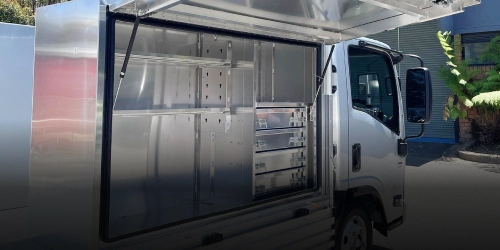
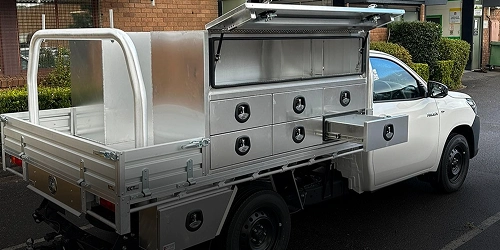
Multiple storage options are available for your carpenter trailer. It is crucial to have as many as possible because, without them, the place will look like a big pile of tools in which no one can find its way. When you use adequate storage solutions, such as shelves, cabinets, drawers, racks, containers, bins, and other things, you’re getting a perfectly arranged area where you know where every tool is at all times.
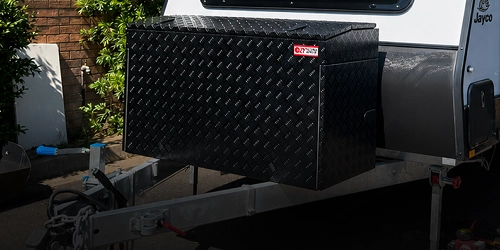
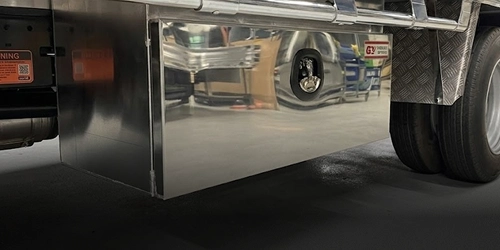
Many opt for truck boxes with drawers as a solution for this. You don’t have to drill any holes and fit dozens of shelves – you fix the toolbox that already has everything inside ready and waiting for you to fill it with your much-needed hammers, pliers, screwdrivers, and whatnot.
2. Workbenches
Not just one, but at least two workbenches on both sides that are implemented under the trailer is what most carpenters will install. Do this because a clean and functional working area is something everyone strives for.
The workbenches are made of sturdy materials that can take the pressure of various tools. Their legs are always reinforced with materials that will withhold heavy loads and most commonly come with additional mechanisms allowing you to fix them in the ground and provide a secure working area that you can rely on.
3. Tool racks
Everything that won’t fit inside the drawbar toolbox or the other tool-keeping compartments can go on the tool rack. Of course, the racks can hold only tools that are lightweight enough, but they pose a perfect addition to all the other storage compartments, especially because they cover the walls, which are usually left empty.
There are multiple different tool rack types. You can hang the tools on hooks, but you can also use an alternative version. You can use magnets for connecting your tools, create a sliding area, or use it as a pegboard. All these options are commonly used and added depending on the owners’ preferences.
4. More than one power socket
When you’re working as a carpenter, electricity is much needed. Although many tools are now battery-powered, some of the most powerful ones still require a cable and electricity. Owning more power sockets and an electricity installation that will connect the trailer to a local power supply is more than needed.
For this, you will need a skilled electrician who will connect the dots and provide this feature, or you can do it yourself if you know enough about it. Remember that electricity may be deadly if you don’t know how to handle it, so ensure you’re skilled enough, or someone else will handle the job for you.
5. Ventilation
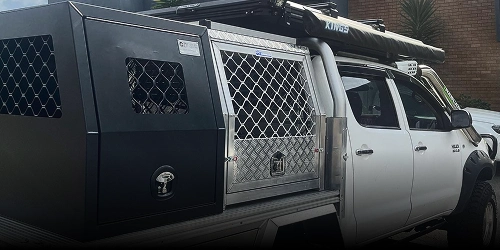
Finally – a great vent system. This is essential for the entire setup because your machines and tools require an air breeze for many reasons. A standard caravan toolbox with a slide might be frequently opened and closed, so no condensation happens there, but an enclosed trailer needs proper ventilation.
While driving, the vent system will let enough air come in and get out, allowing your tools to be in perfect condition. Ventilation also maintains the temperature inside the trailer to an optimal level and prevents overheating.
Choosing the Right Carpenters Trailer for Your Work
Choosing the right trailer starts with understanding how the trailer will be used day to day and what specific needs your work demands. A carpenter focused on residential fit-outs may need a different setup than someone working on larger construction projects. Size of the trailer, durability, and whether it is built from steel or aluminum all play a role in long-term performance. A reliable trailer should be designed to meet demanding workloads, support safe tow and transport, and provide peace of mind on every trip. Selecting a tradesman trailer that aligns with your workflow ensures your trailer meets your specific expectations.
FAQs
Can a tradesman trailer be used for carpentry work?
Yes, a tradesman trailer can absolutely be used for carpentry work, and many tradesman trailer manufacturers design models that are versatile enough to support woodworking tasks. What matters most is how the trailer is equipped. When storage, workbenches, ventilation, and power access are properly configured, a tradesman trailer offers the flexibility carpenters need on site. With the right setup, it becomes a practical solution for managing tools and equipment while supporting efficient, professional carpentry work across different job environments.
How do I maintain my carpenter trailer?
Trailer maintenance is essential for maintaining performance, safety, and longevity. Regularly checking hinges, locks, brakes, and hitch and towing components helps ensure the trailer is safe to use and ready for daily work. Keeping storage areas clean prevents dust buildup that can damage tools and materials. Ventilation systems should be inspected to avoid moisture issues, especially in enclosed setups. A consistent maintenance routine protects the reliability of your trailer and ensures it can withstand the toughest conditions over time without unexpected downtime.
What size carpenter trailer do I need?
The size of the trailer depends on the volume of tools and materials you carry and how often you move between job sites. Smaller operations may benefit from a compact box trailer, while larger carpentry businesses often require trailers designed to handle heavy loads. It is important to choose a trailer that meets your specific workload without overloading. A trailer that meets the right balance between capacity and manoeuvrability will be easier to tow, safer to use, and more efficient in daily operations.
Is it possible to customise a carpenter trailer for multiple trades?
Yes, many trailers offer customisation options that make them suitable for multiple trades. A custom trailer can be fitted with adjustable storage, removable workbenches, and security features that suit different tools and workflows. This flexibility is especially useful for contractors who handle varied projects or work across different trades. By choosing a trailer manufacturer that understands trade versatility, you can ensure the trailer meets evolving requirements while remaining durable, secure, and practical for long-term professional use.
Author: Dean Peechiari Date Posted: 10 July 2024